
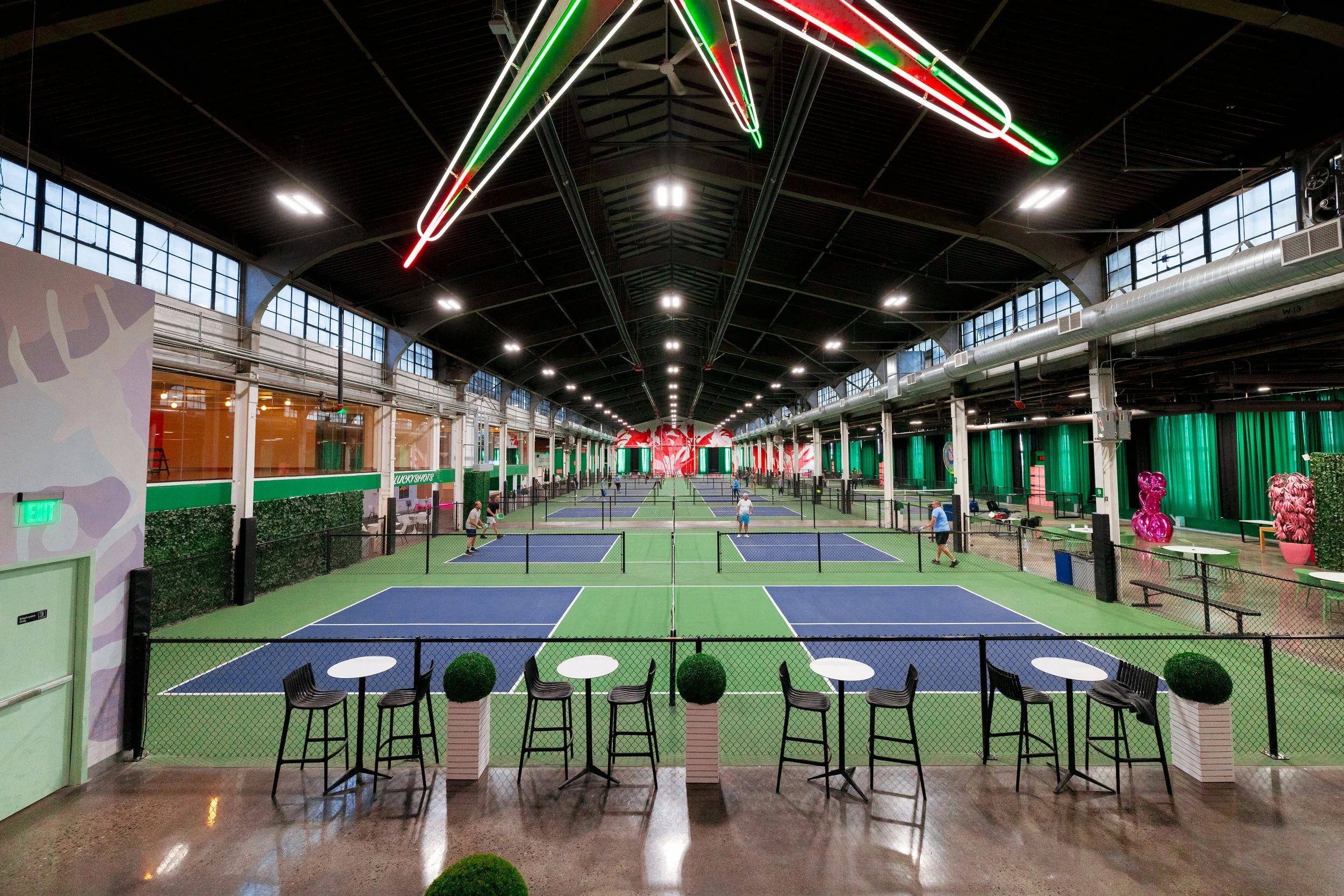
After returning from international travel, I was brought in as Interim Marketing Director for Lucky Shots Pickleball to establish the strategic and technical marketing foundation the business needed to grow. The owner recognized the need to invest in marketing but lacked clarity around structure, systems, and long-term direction. Over eight months, I built that foundation while simultaneously executing day-to-day marketing initiatives to maintain momentum and prepare the business for scalable expansion.
Brand Strategy & Identity Development
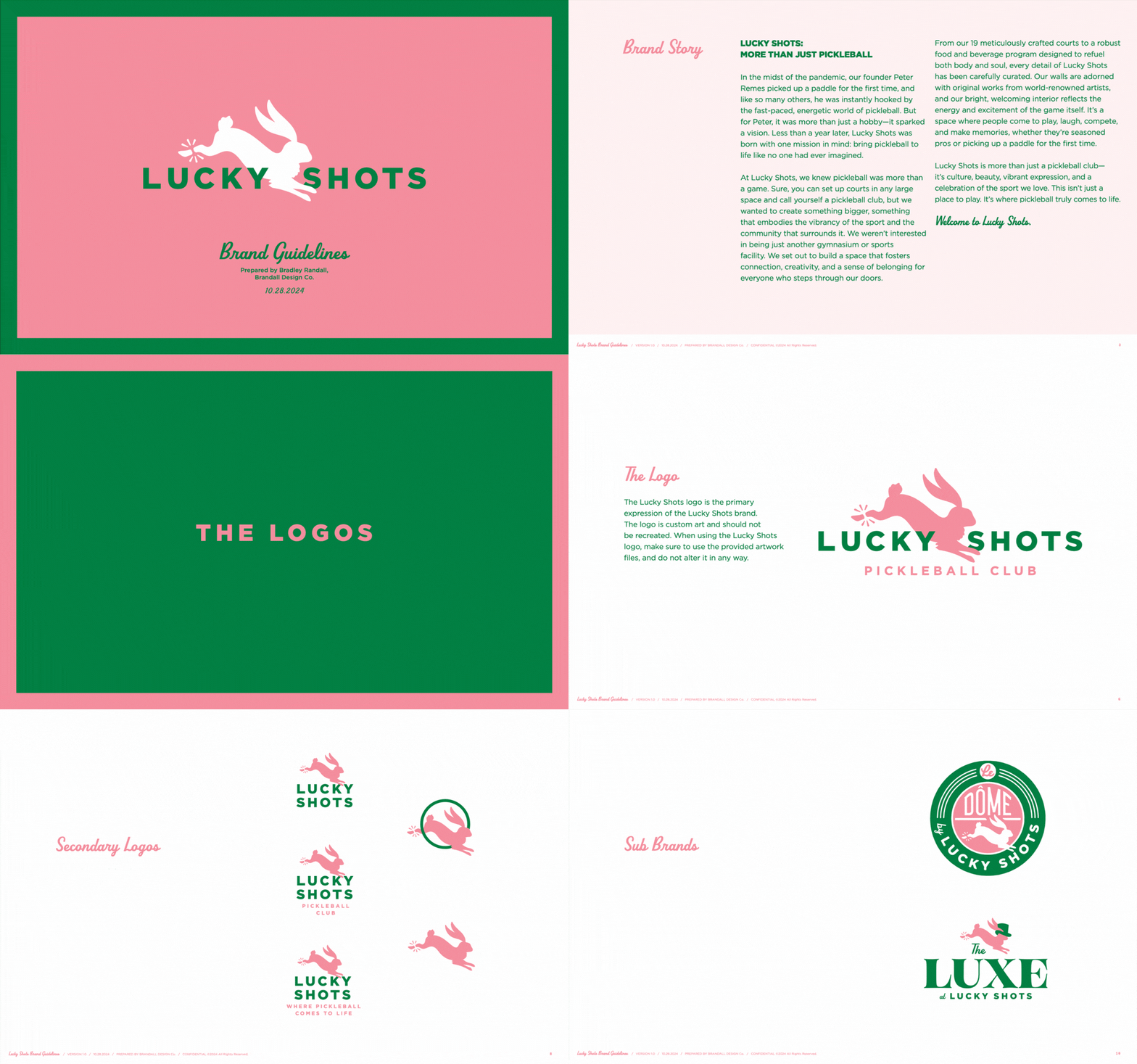
In partnership with Brandall Design Co., I led the development of a comprehensive brand strategy that defined Lucky Shots’ positioning, messaging framework, visual identity, and voice. I authored the brand narrative and strategic direction, which Brandall translated into a formal brand deck. The refreshed identity embraced vibrant colors and a vintage tennis/country club aesthetic, intentionally differentiating the brand from the generic look common across pickleball clubs. This gave Lucky Shots a distinctive, ownable identity built to support long-term brand equity and multi-location growth.
Website overhaul & SEO Strategy implementation
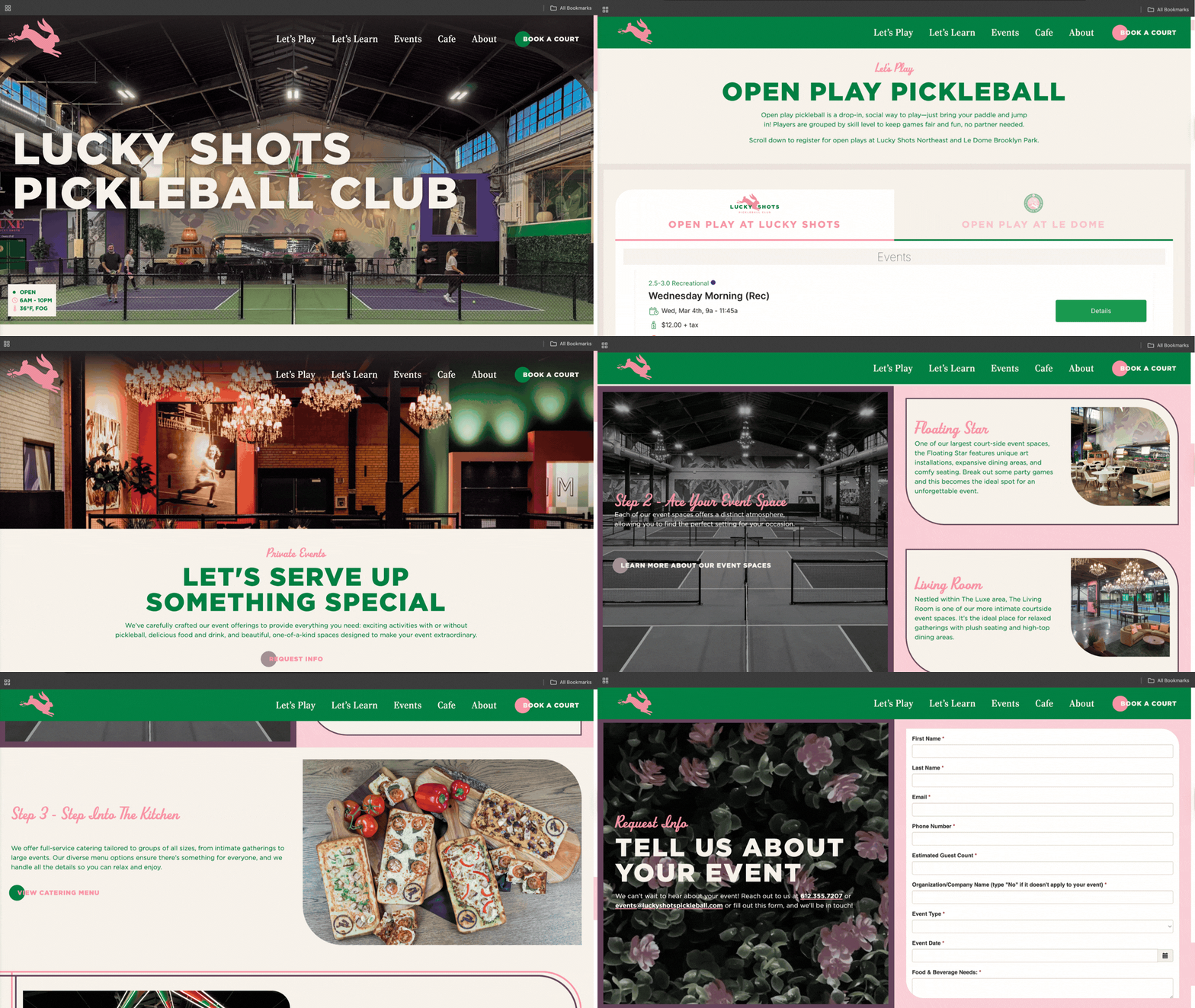
With the new brand foundation established, I spearheaded a full website redevelopment. After meeting with several agencies, I selected Brandography based on their ability to balance strong SEO/AEO expertise with elevated design execution. I directed the site’s strategy and structure to ensure it functioned as both a high-performing acquisition channel and an educational resource for new players. We built dedicated landing pages for class schedules and open play and implemented a comprehensive SEO strategy to drive organic discovery. The site reduced friction for first-time players by answering key questions and positioning Lucky Shots as an accessible, welcoming club.
CRM & Marketing Systems Integration
When I arrived at Lucky Shots, the club’s booking software, Court Reserve, lacked true CRM capabilities, offering only basic mass email functionality without analytics, segmentation, or design tools. This was a large issue for lifecycle marketing, given the platform housed all of our customer contact information.
After repeatedly addressing this issue with the Court Reserve team, I was connected with the CEO, Tim Owens, and secured early access to a beta integration of Patch Retention. I implemented and operationalized the system, enabling custom audience segmentation, branded email design, performance analytics, synchronized email capture from booking activity, SMS marketing capabilities, and the ability to accrue consumer data in the upper funnel. This transformed Lucky Shots’ marketing from reactive email blasts into a data-informed lifecycle strategy that supported retention, engagement, and revenue growth.
Expansion & Launch Strategy: Le Dome by Lucky Shots
During my tenure, I also led branding finalization and go-to-market strategy for the company’s second location, Le Dome by Lucky Shots, a converted sports dome facility in Brooklyn Park. I worked closely with Brandall to refine the brand expression for the new space while directing the launch campaign and PR outreach.
Through sending press releases, I secured coverage with Fox 9, CCX Media (Brooklyn Park’s hyper-local news), Minneapolis/St. Paul Business Journal, and Twin Cities Live, generating strong regional visibility and credibility at launch. On organic social media, I reached over 90K local consumers across TikTok, Instagram, and Facebook as an additional awareness driver.
These efforts led to a highly successful launch day and generated an immediate customer base for the new facility.
Earned Media Coverage
Organic Media success
Caption: New location opening soon, more details to come🙂↕️🤝
Teaser post generating ~7,500 engagements across all platforms while reaching over 60,000 local consumers.
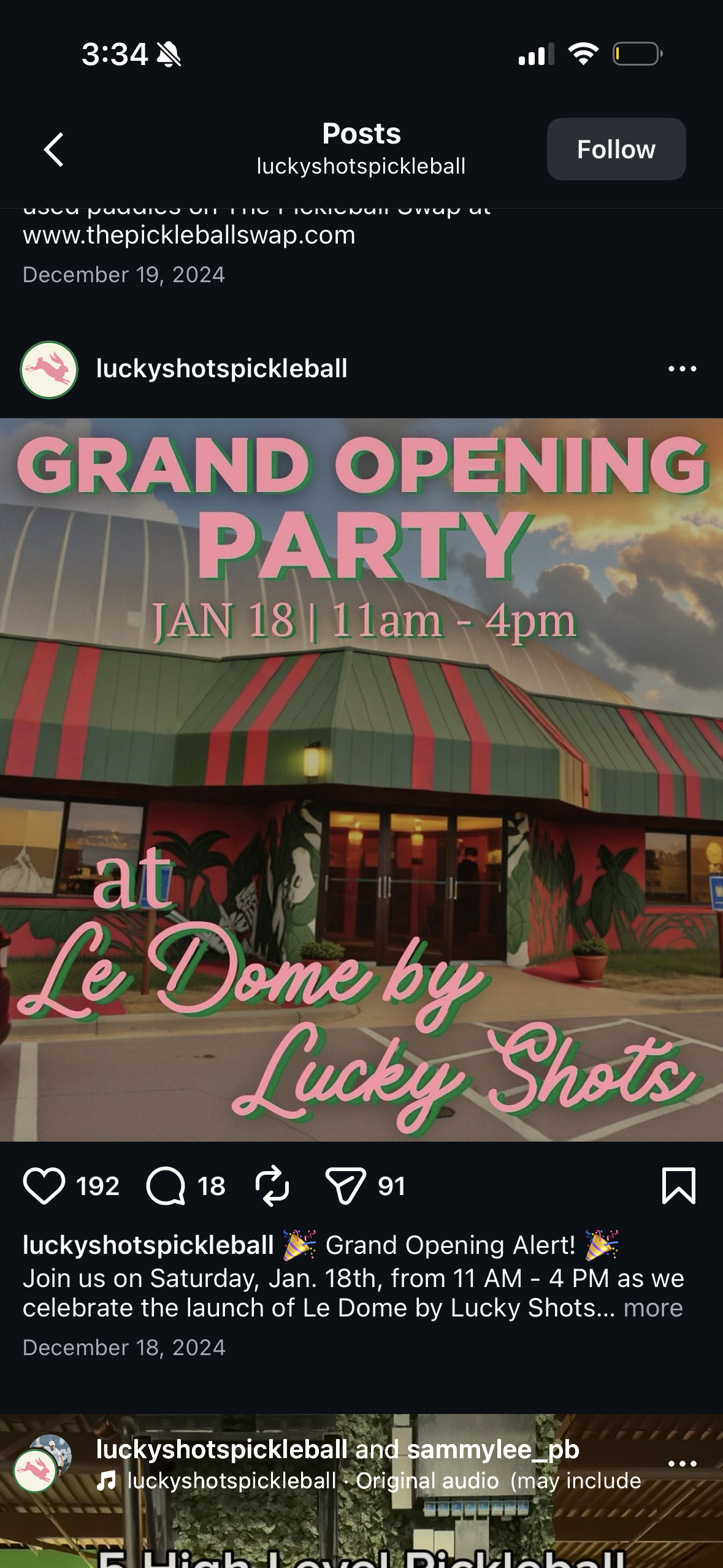
Official announcement post (prior to finalization of brand guide) generating over 500 engagements and reaching ~5,000 people across all platforms.
Update post generating 200+ engagments and reaching 4,000+ people across all platforms engagements across all
UGC from local micro-influencer organically created at the event and reposted to our platforms for no cost.
Ongoing Marketing Execution
In addition to building long-term infrastructure, I managed ongoing marketing execution across all channels. This included developing creative assets, writing and deploying email campaigns, managing social media, updating website content, and capturing photography and video at the club. The role required balancing strategic leadership with hands-on implementation, ensuring the business continued to grow while establishing a scalable, performance-driven marketing ecosystem.
Viral Organic Content:
508K Views & 28K Engagements
Lifecycle Marketing:
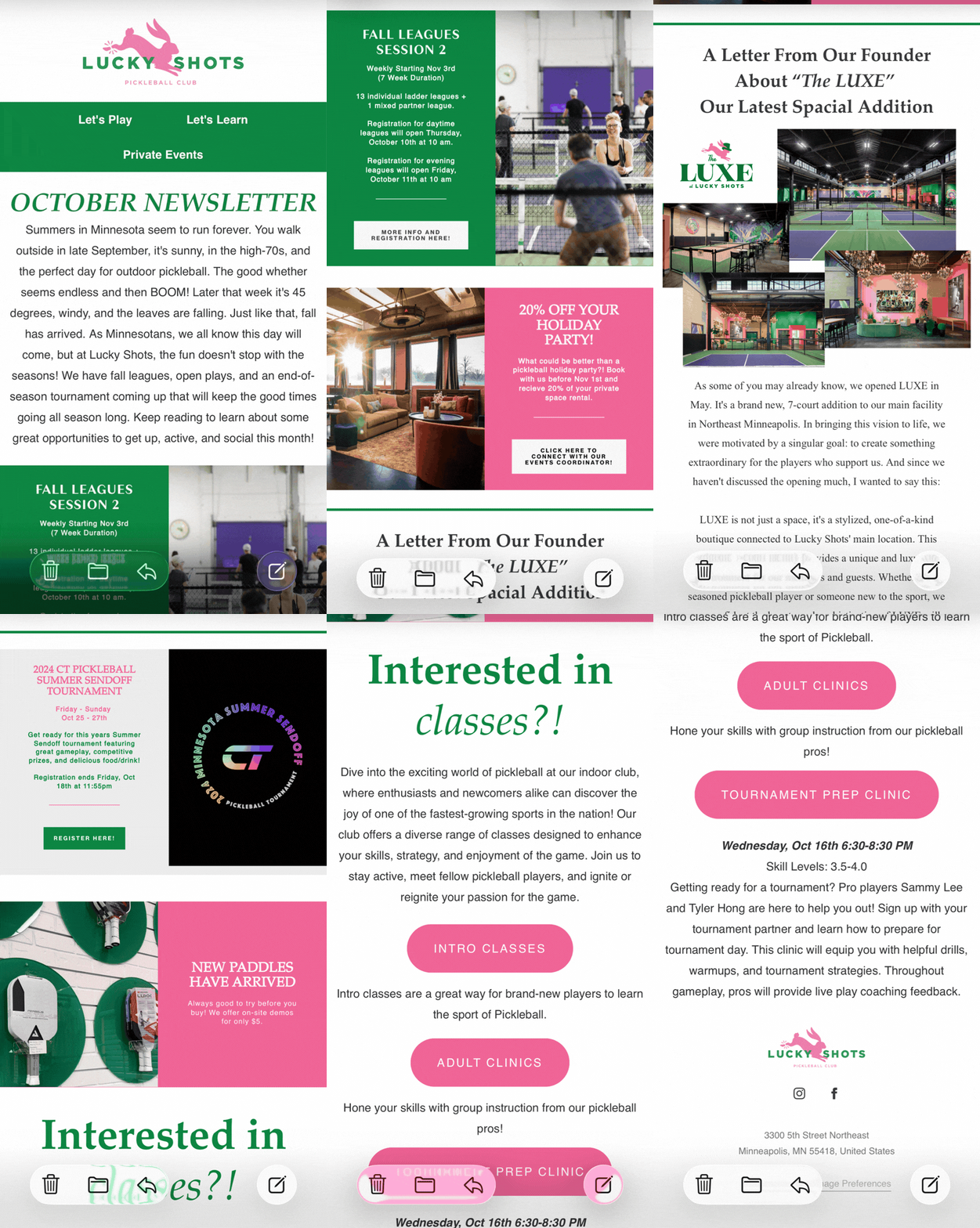
Emailed to 23K Customers
Influencer Activation:
135K Views & 13K Engagements
League Launch Example:
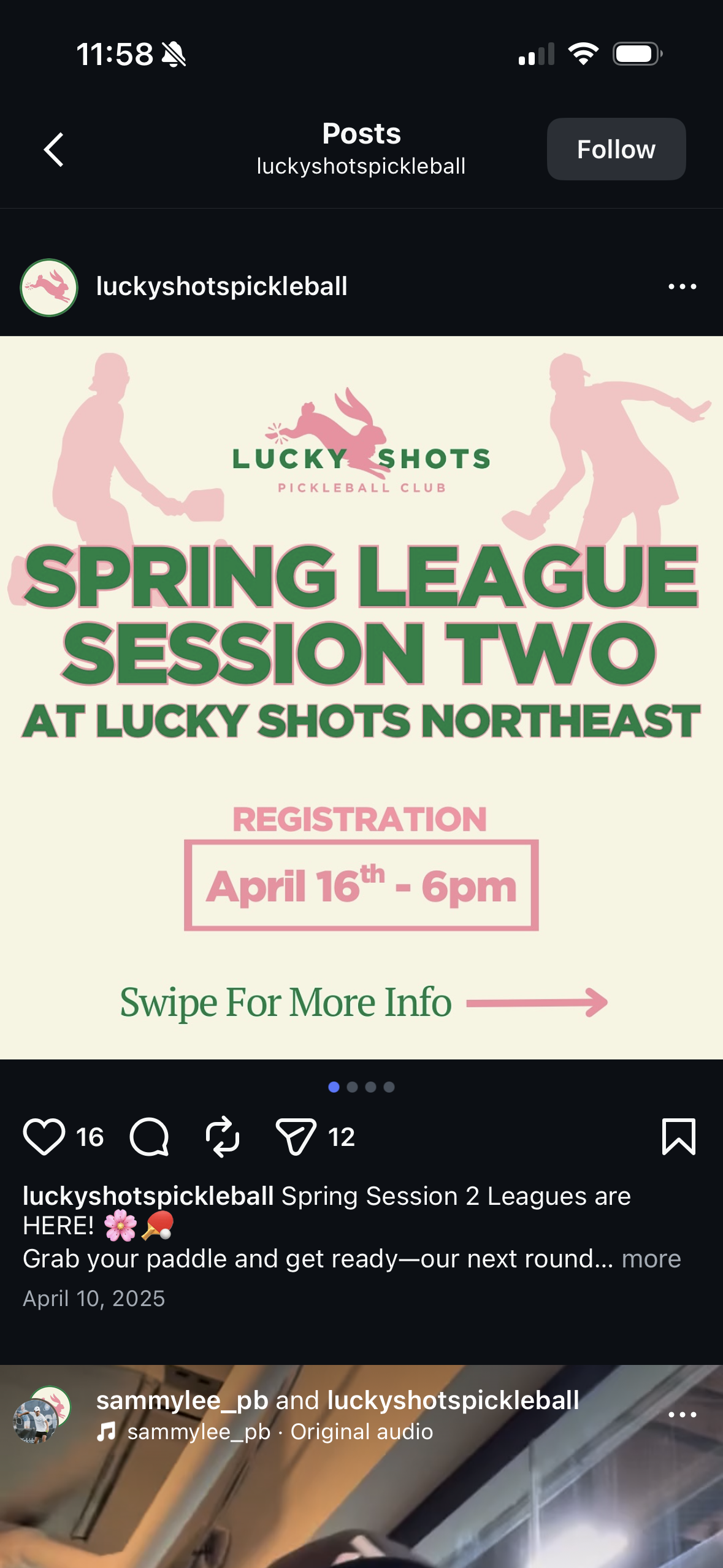
Drove ~63K in Revenue
Off-Boarding for Success
With the brand, website, and CRM infrastructure fully built, Lucky Shots no longer required senior-level strategic oversight. As planned, the business was ready to transition to a content-focused marketer who could manage day-to-day activation more nimbly and cost-effectively.
I partnered with ownership to define the role, participate in hiring, and onboard a new marketing professional. To ensure continuity, I created detailed SOPs covering brand and channel strategy, campaign planning, and workflows across WordPress, Patch (CRM), and Court Reserve. After a structured transition period, I exited the organization with systems documented, technology fully integrated, and a scalable marketing engine in place to support continued growth.
Marketing after my departure:
Fun Organic Video Content Embodying Brand Voice.
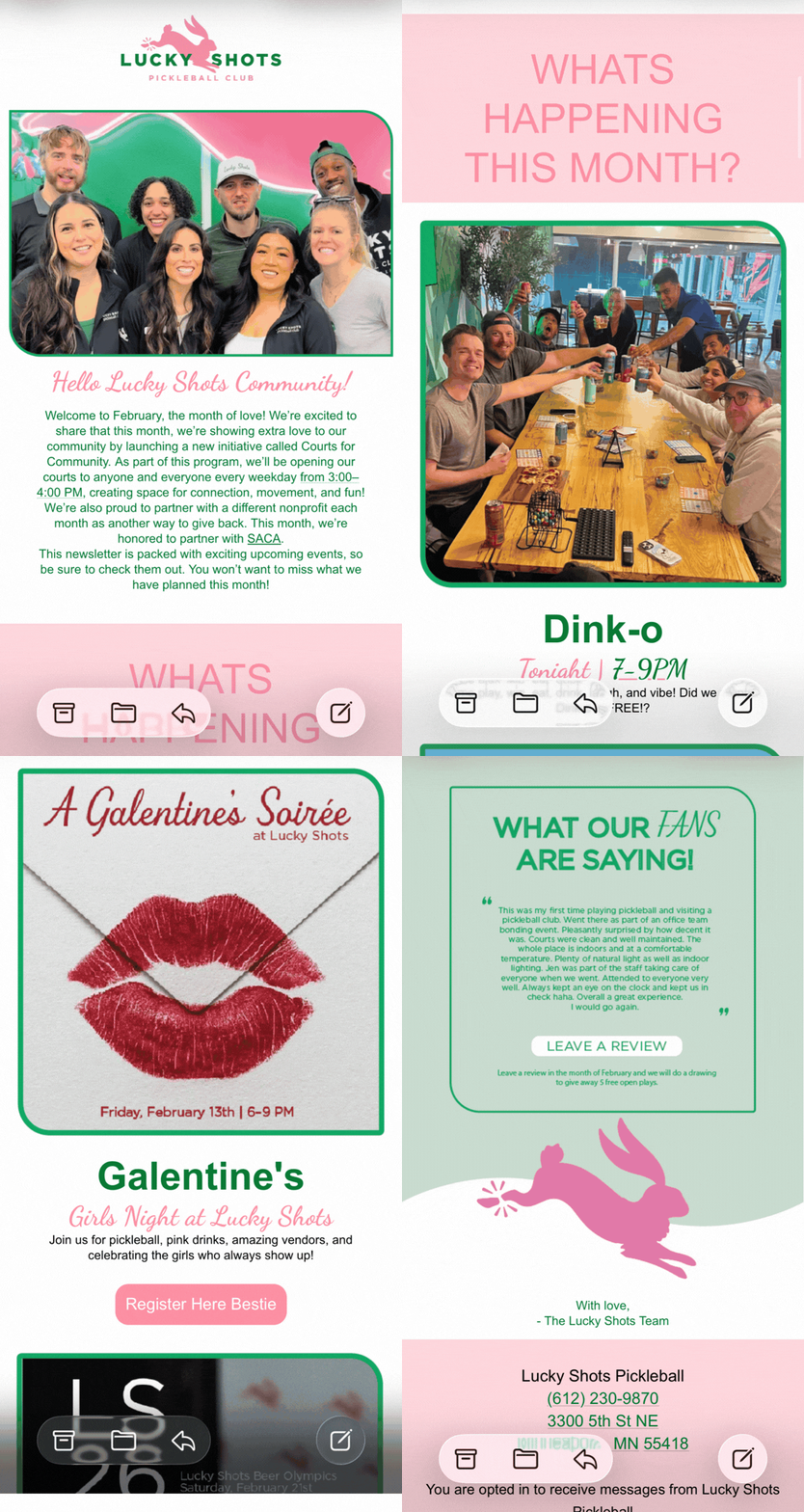
Strong Email Execution of Brand Guide Utilizing Patch.
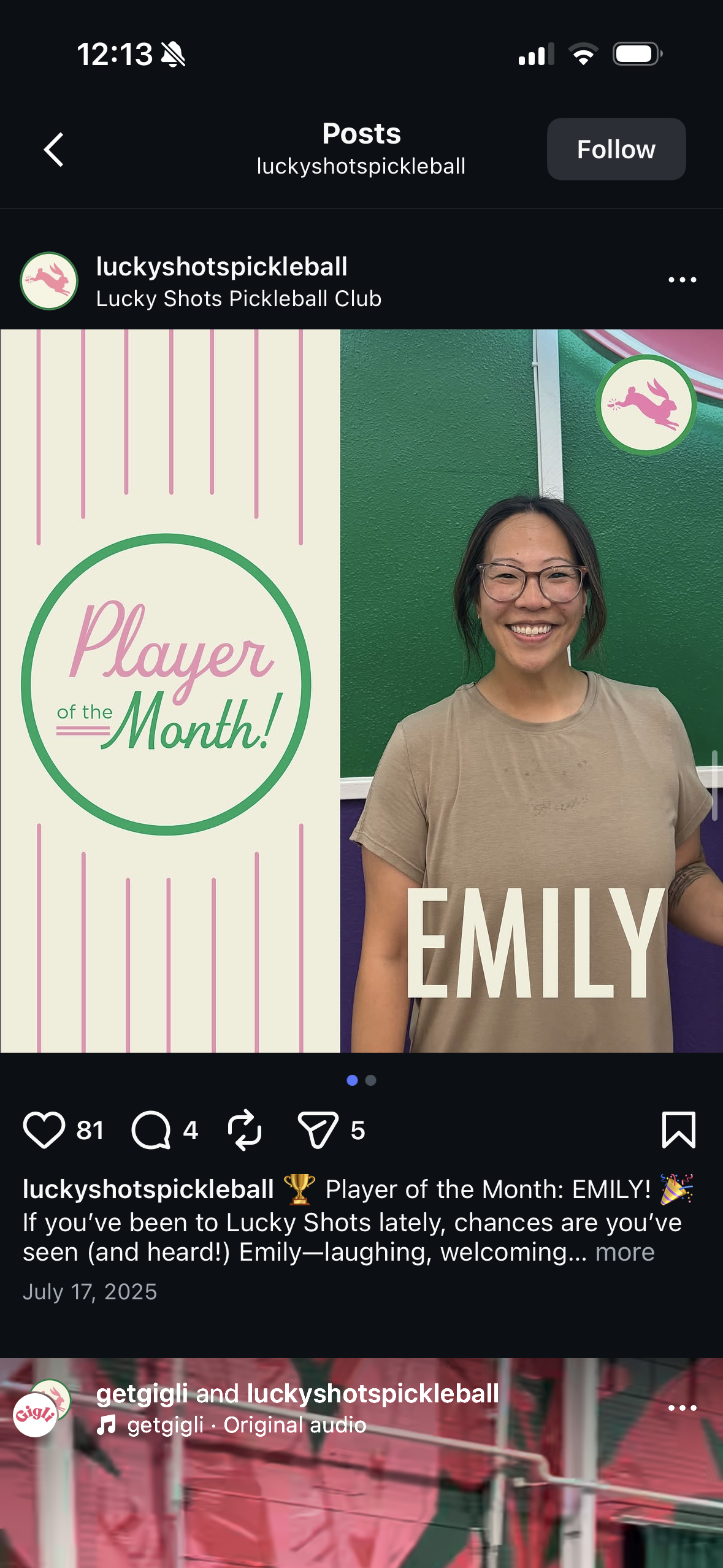
Fun Organic Activiation with Strong, Brand-Forward Design.
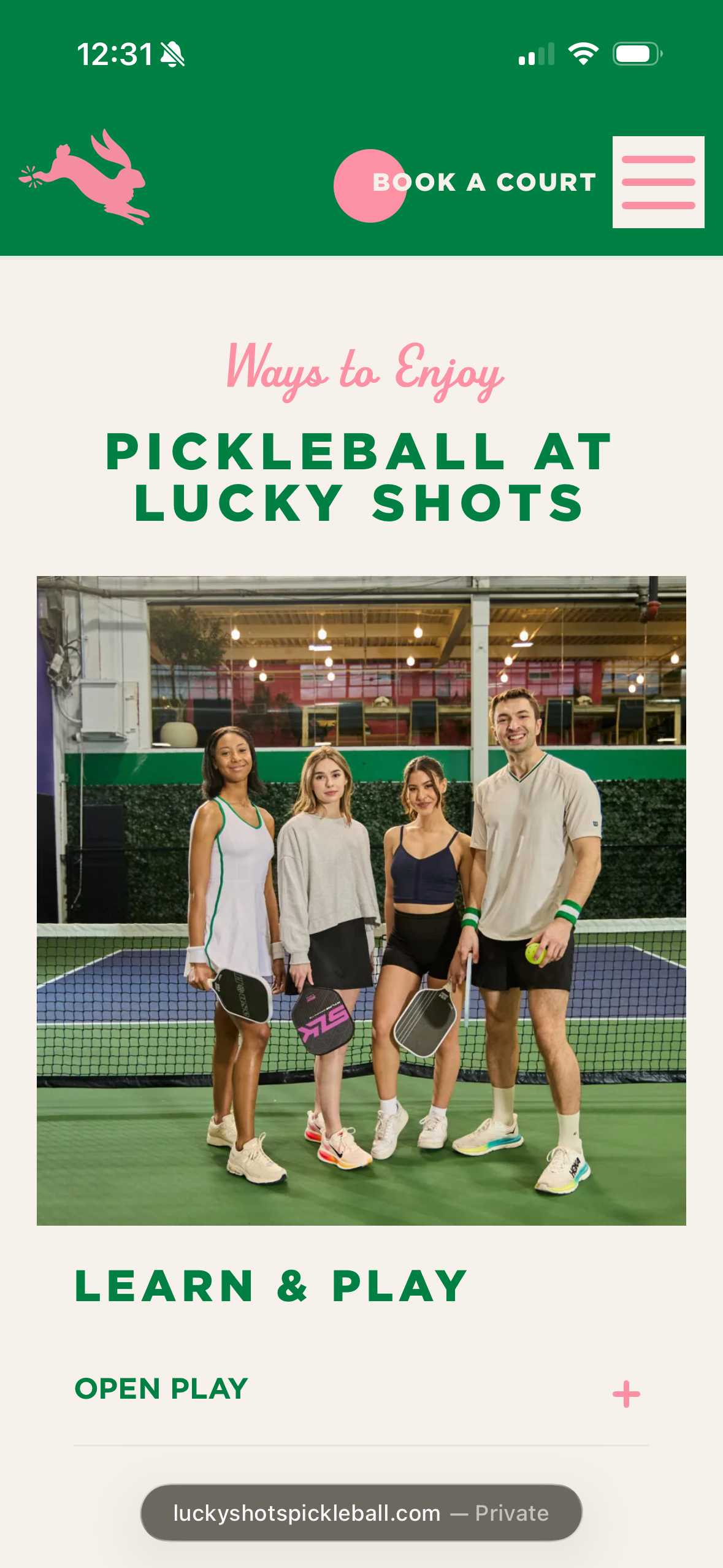
High Performance, Brand-Aligned Website to Use in Perpetuity .